Learn
Guides to gait, the TUG and the SPPB
How each test works, what the numbers mean and how to run them at home, with the research behind every number.
Shorts
One-minute reads: the numbers that matter, with a link to the full guide.
Guides
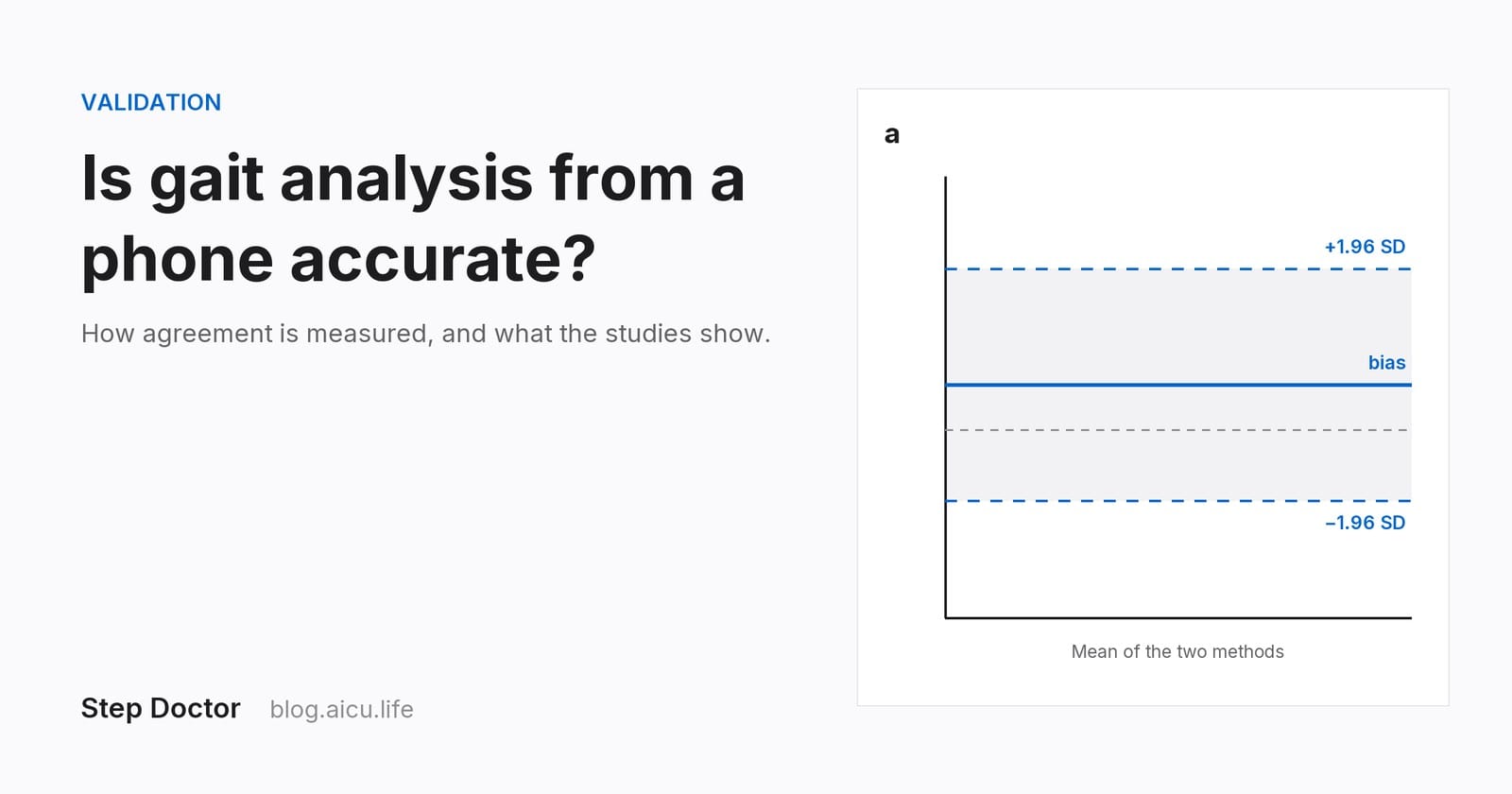
Is Gait Analysis From a Phone Accurate? How Validation Works, and What Studies Show
How gait measurement is validated (reference systems, ICC, Bland–Altman limits of agreement, meaningful change), what published studies of camera and phone tools found, and six questions to ask of any app's evidence.
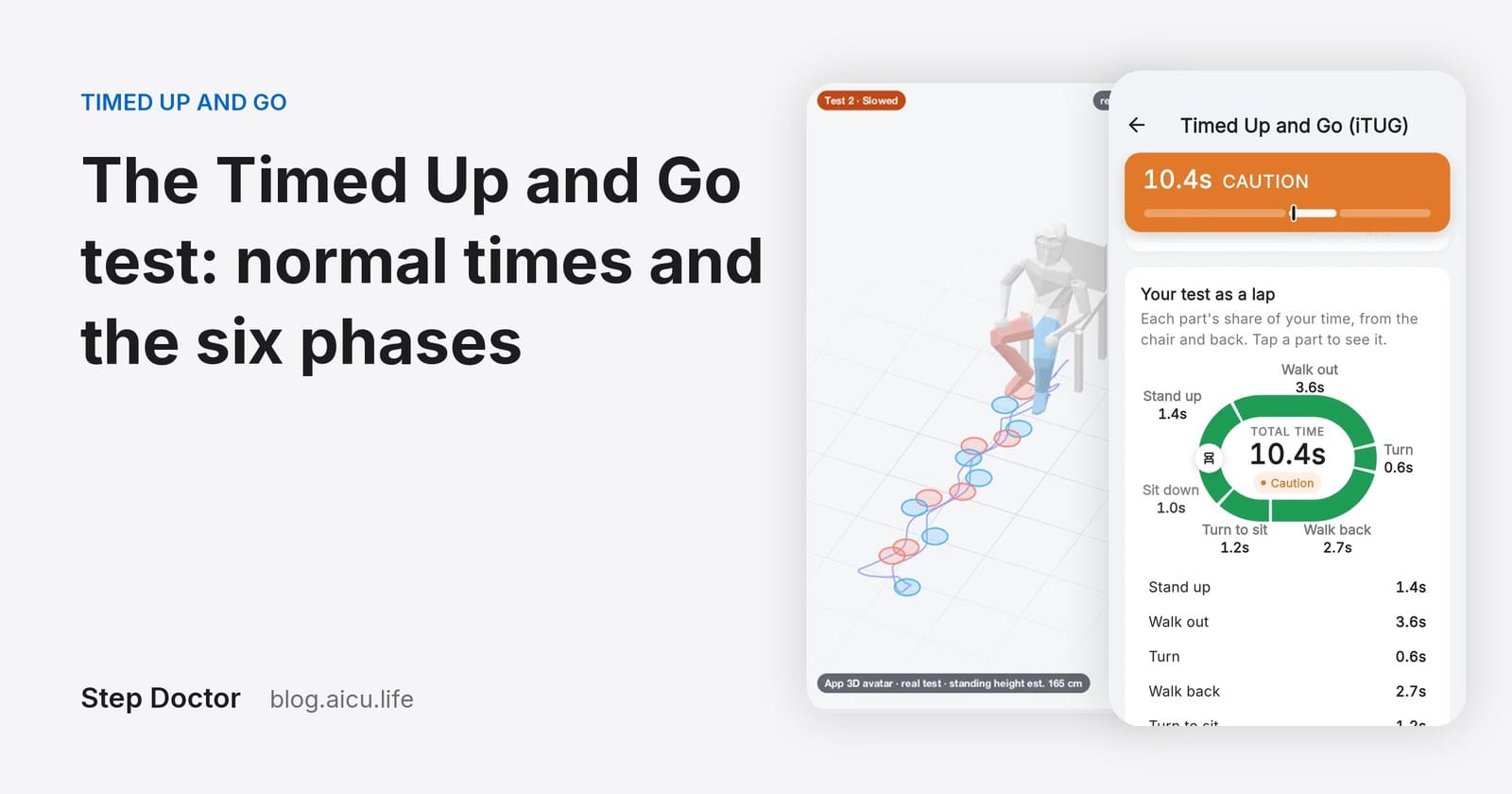
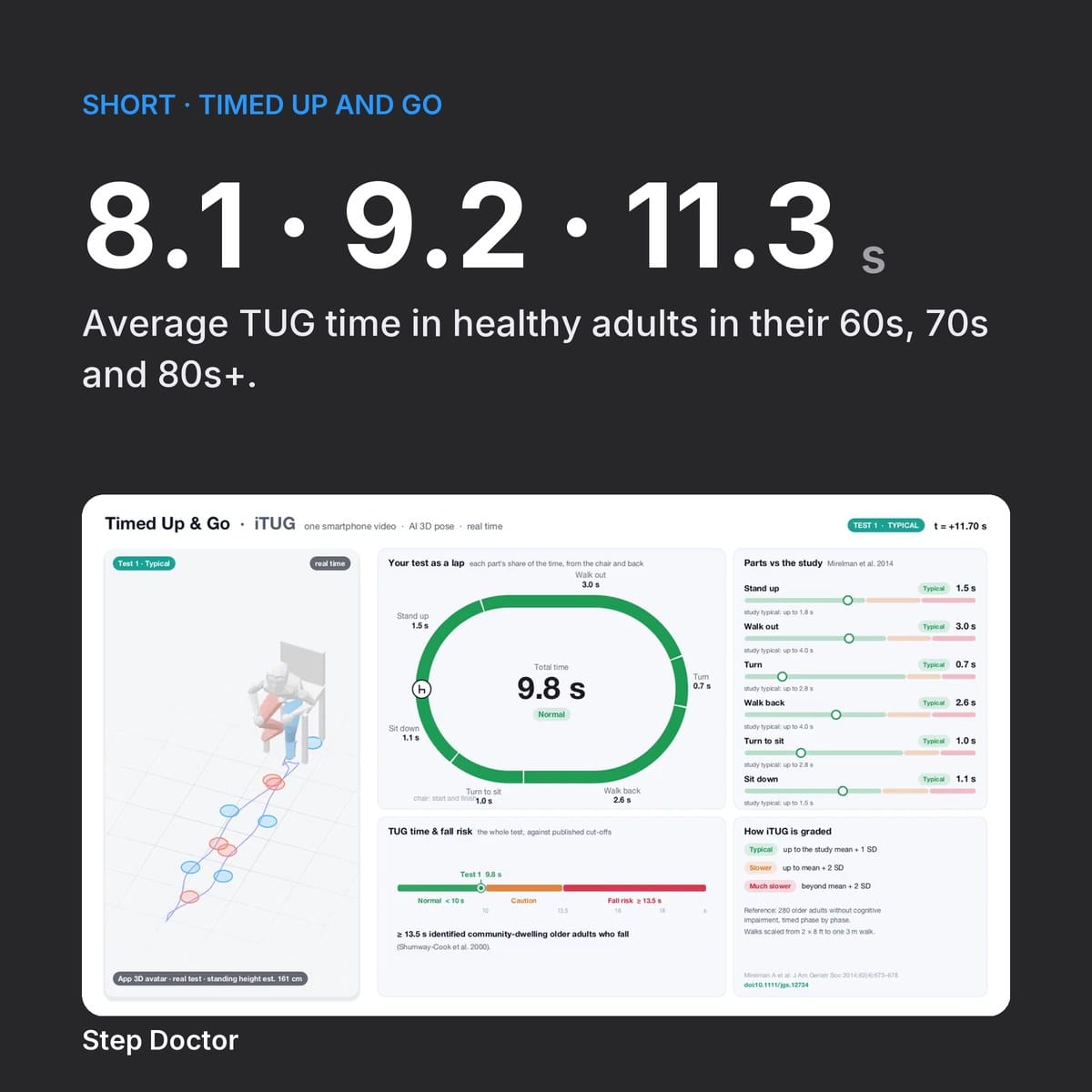
The Timed Up and Go (TUG) Test: Normal Times by Age and the Six Phases
How to do the Timed Up and Go test, average times by age (8.1, 9.2 and 11.3 s), what the 12 s and 13.5 s cut-offs mean, and why the instrumented TUG times six phases.

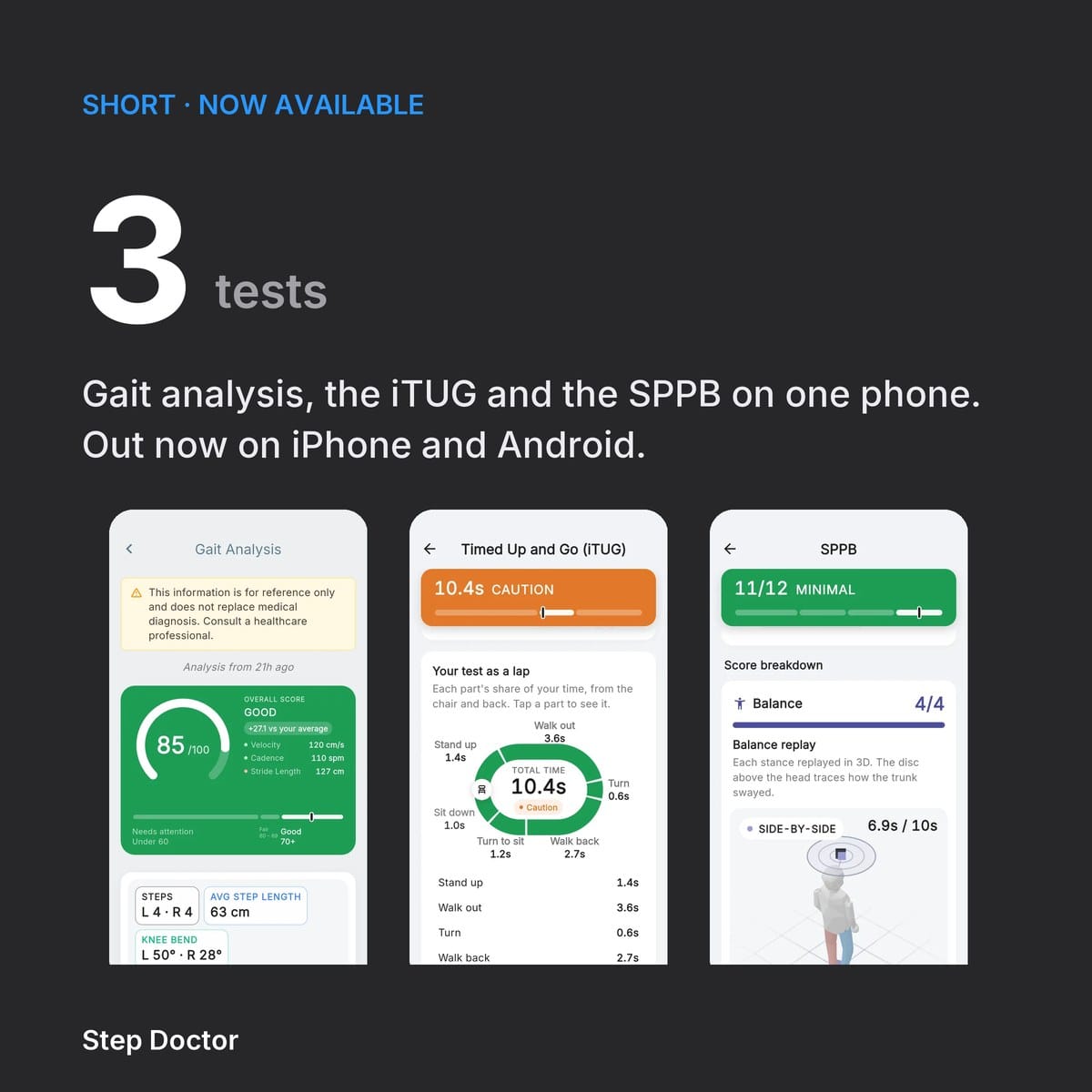
Step Doctor Is Out: Gait Analysis, iTUG and SPPB on One Phone
Step Doctor is fully released on iPhone and Android in English and Korean: gait analysis, the instrumented Timed Up and Go and the SPPB, run and scored from one phone video.
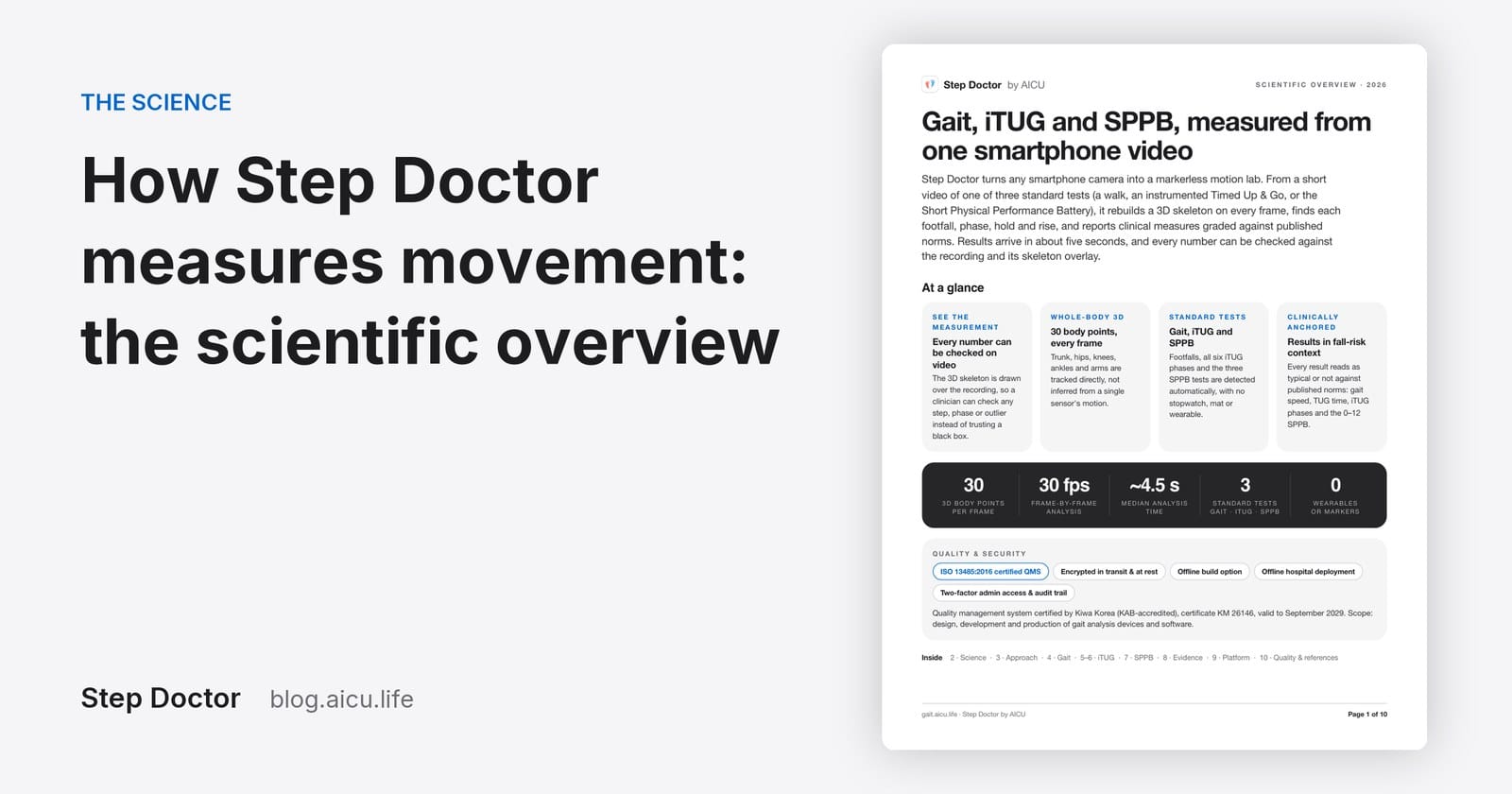
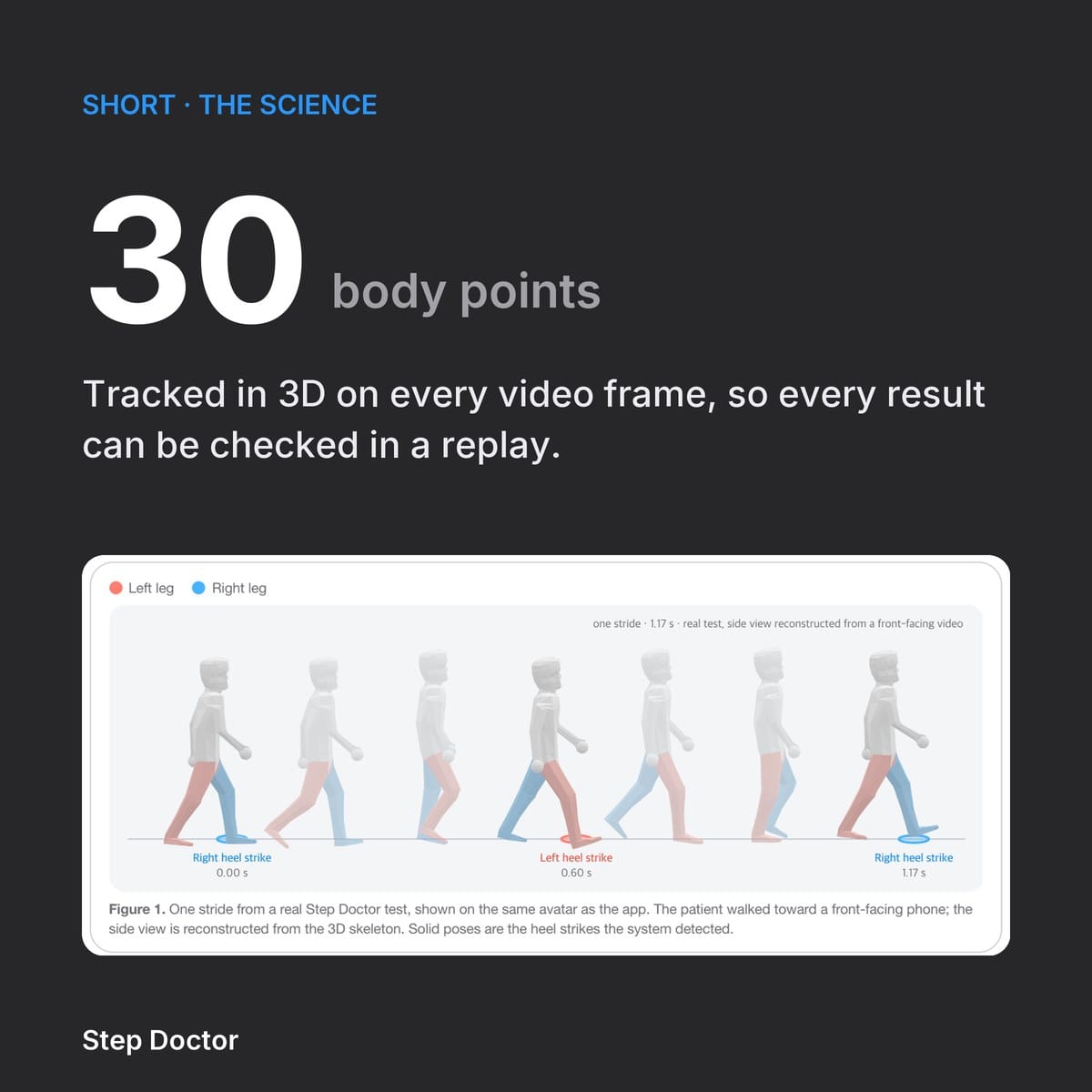
How Step Doctor Measures Movement: The Scientific Overview
How Step Doctor turns one phone video into 3D measurements of gait, the iTUG and the SPPB, the published evidence each result is judged against, and what has and hasn't been validated yet.
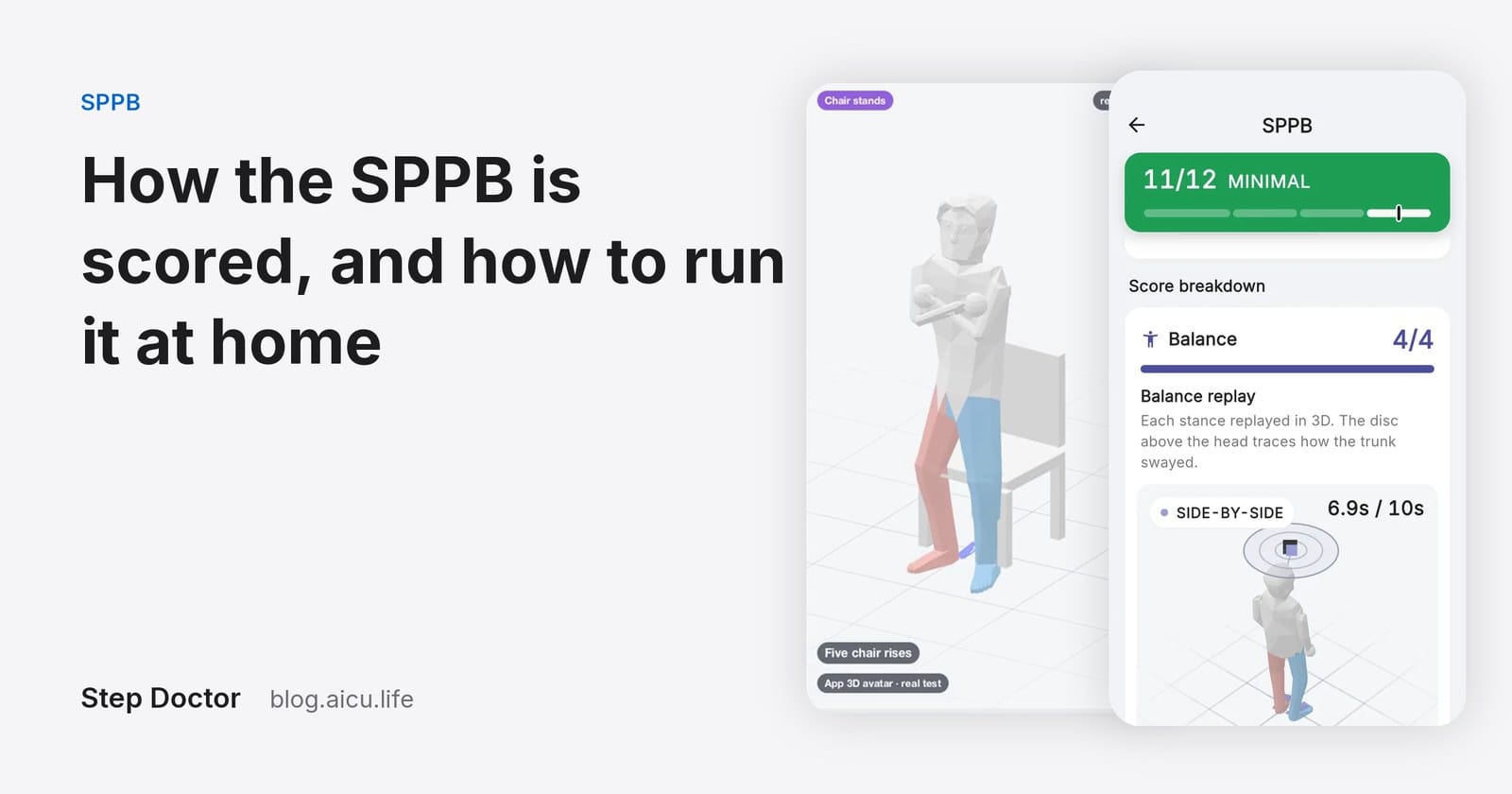
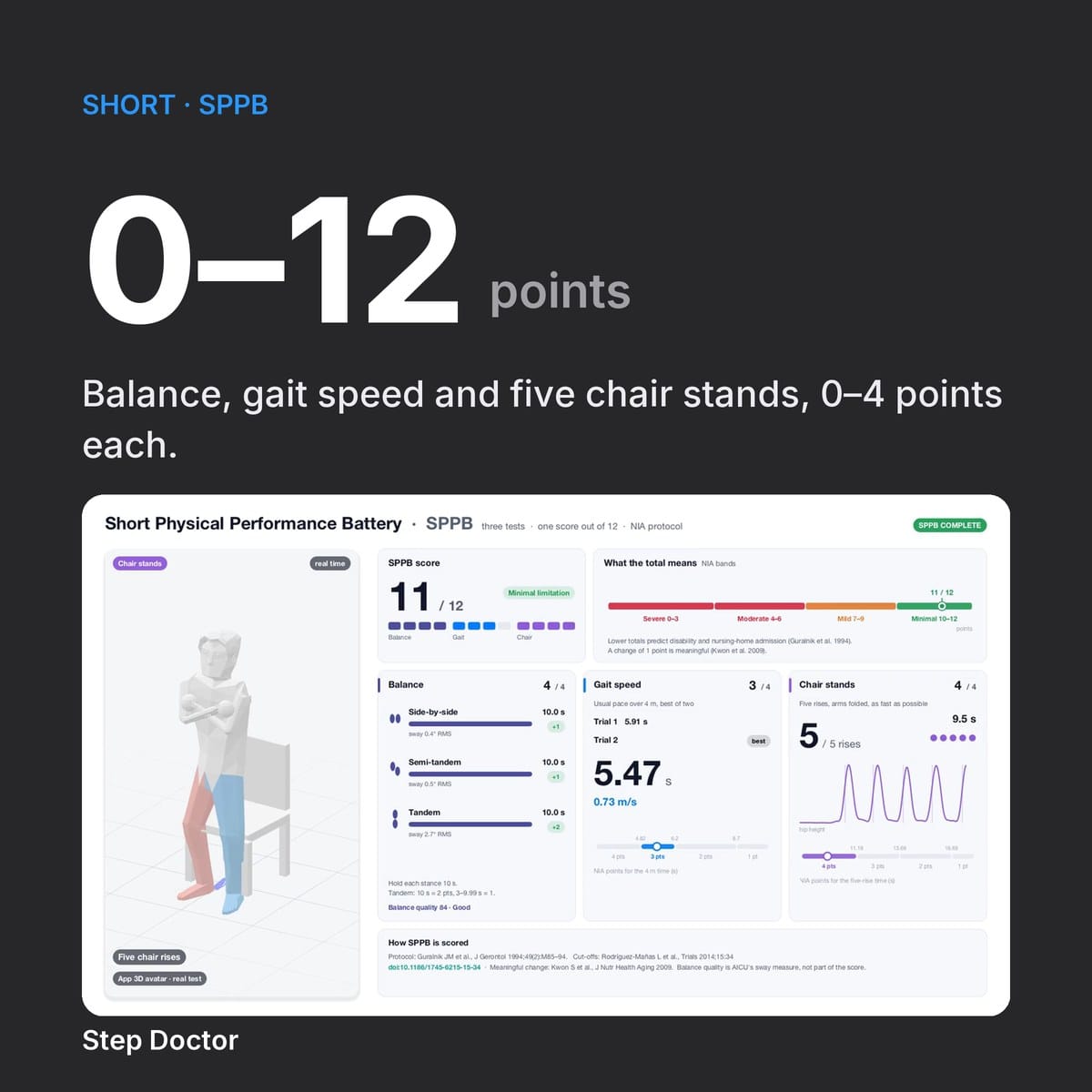
How the SPPB Is Scored, and How to Run It at Home
The Short Physical Performance Battery explained: the three parts, the exact 0–12 scoring cut-offs, what each band means and how to run the full SPPB at home with one phone.
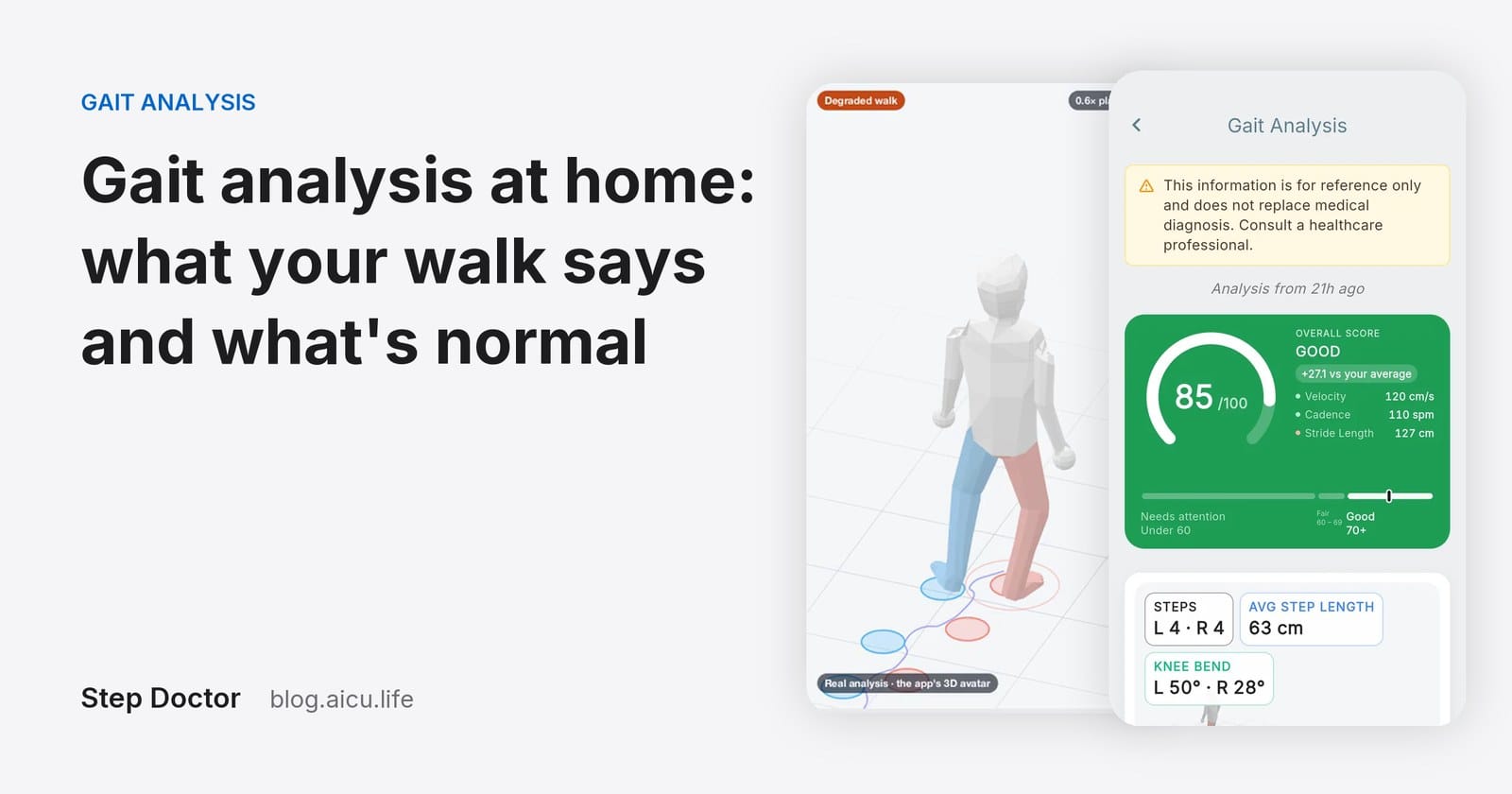
Gait Analysis at Home: What Your Walk Says and What's Normal
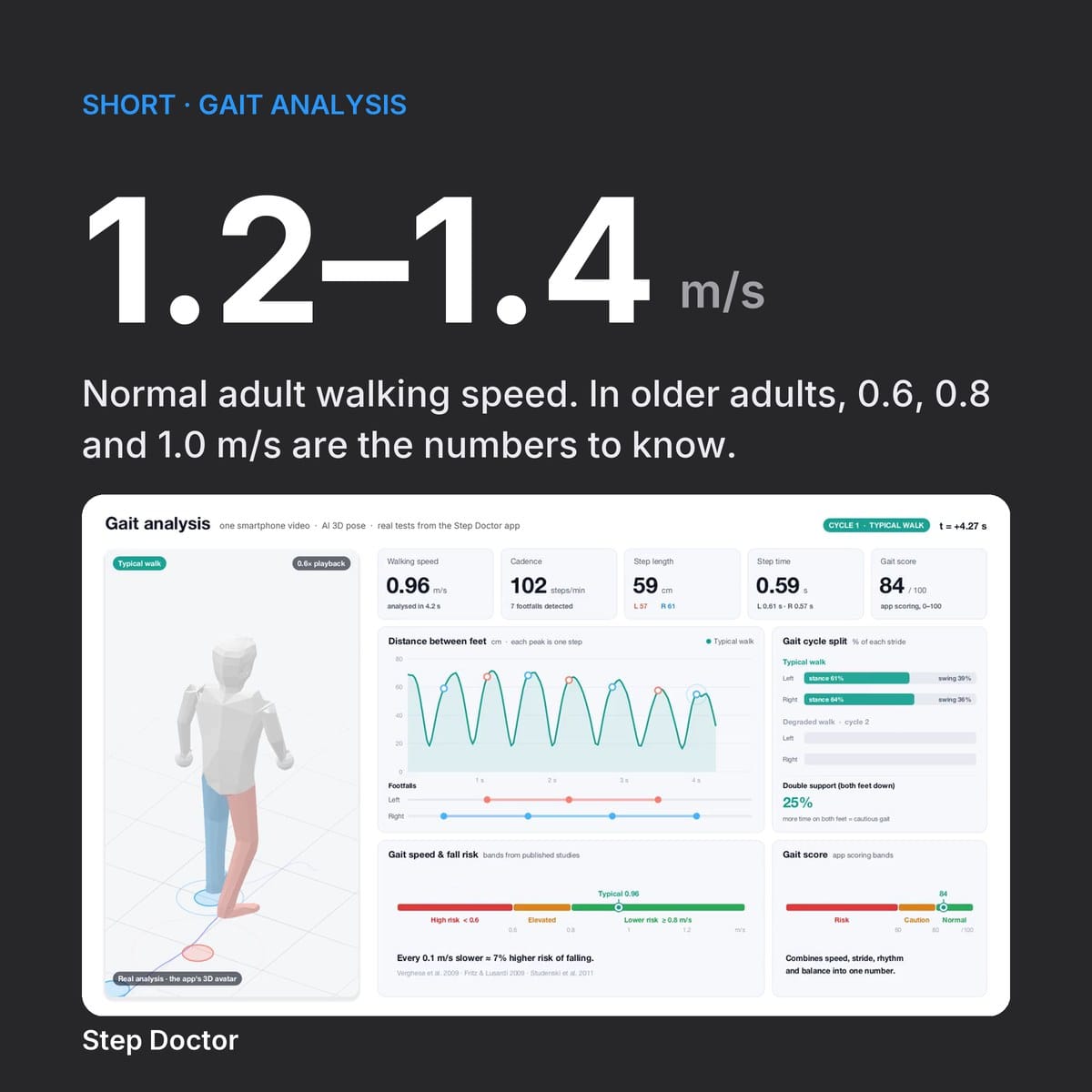
What gait analysis measures, what a normal walking speed is (about 1.2–1.4 m/s in adults), the thresholds that matter for older adults and how to measure your walk at home with a phone.